Article summary
Hormuz: Tehran wants permanent status for the strait, according to Ghalibaf
According to Mohammad Bagher Ghalibaf, Hormuz will never return to its prewar status, and Iran and Oman should oversee the passage. For the text, this is a debatable thesis.
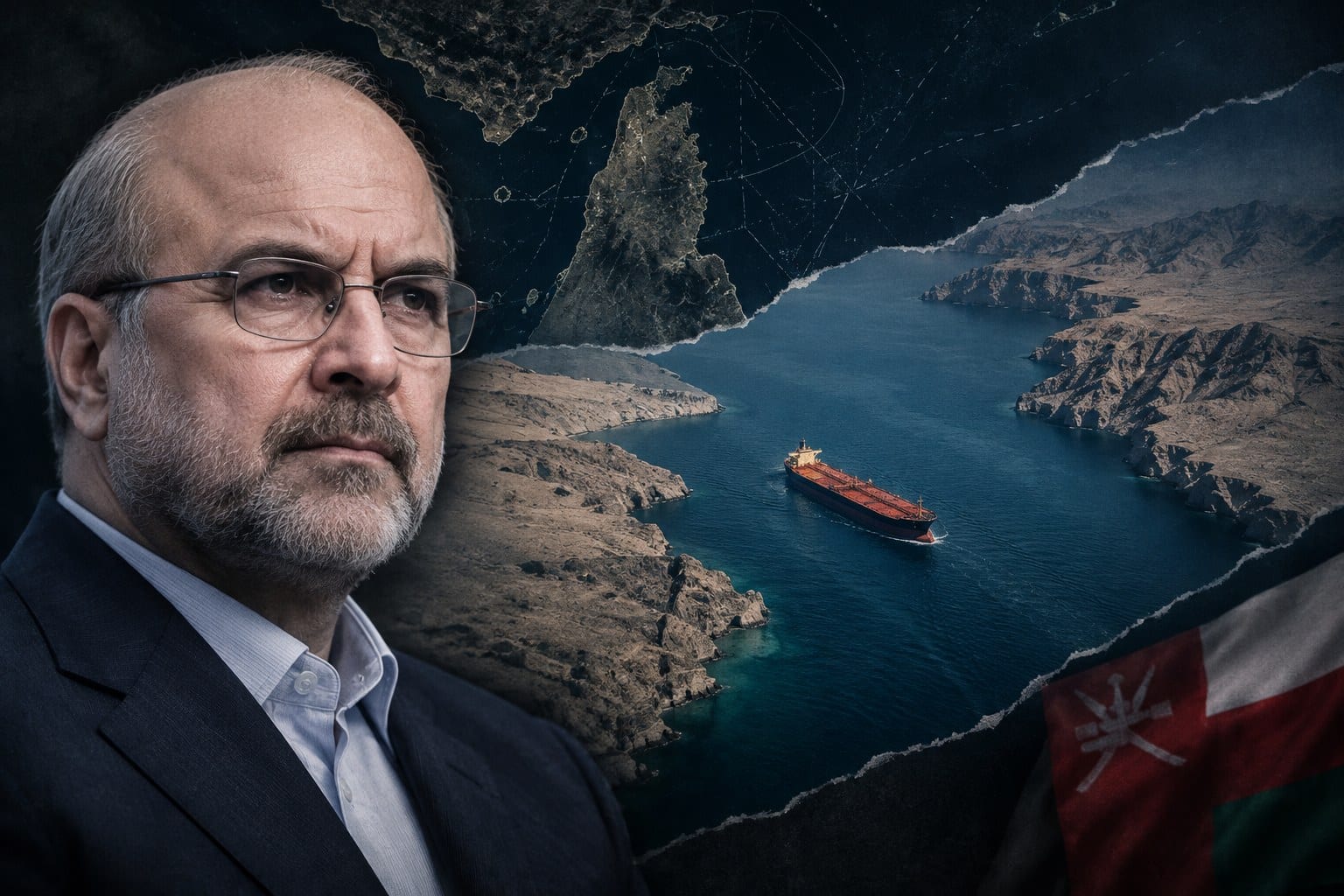
Mohammad Bagher Ghalibaf, at the head of the Iranian Parliament and chief of negotiations, believes that Hormuz will never return to its former status. According to Ghalibaf, no water there is free, and the 1982 legal framework on navigation would not apply there. The passage regime would fall only to the coastal states, Iran and Oman, which would jointly supervise the strait. The text sees this as a statement, and as a debatable legal thesis.
Before any discussion, Ghalibaf demands the application of commitments that would appear in the Islamabad text concluded in June: end of the blockade, reopening of frozen funds, and end of hostilities on all fronts. Ghalibaf therefore attributes the deadlock to distrust, not to the substance, and says that American officials would have asked Vladimir Poutine to open a direct channel. The text notes that nothing corroborates this last assertion.
For the author, the question posed to Washington is simple: accept or not that a strait through which a major share of the world's energy passes be subject to joint control by Iran and Oman. The text adds that the ball remains in Tehran's court, but that the issue goes beyond Iran: it concerns freedom of movement.
Read the full article on geopolitique-profonde.com (in French)