Article summary
Putin, targeted by an ICC warrant, invited to the Miami G20
According to the author, the Shenzhen communiqué provides neither a timetable nor a mechanism, only the clause on the ICC really binds, and Putin’s invitation to Miami shows its limits.
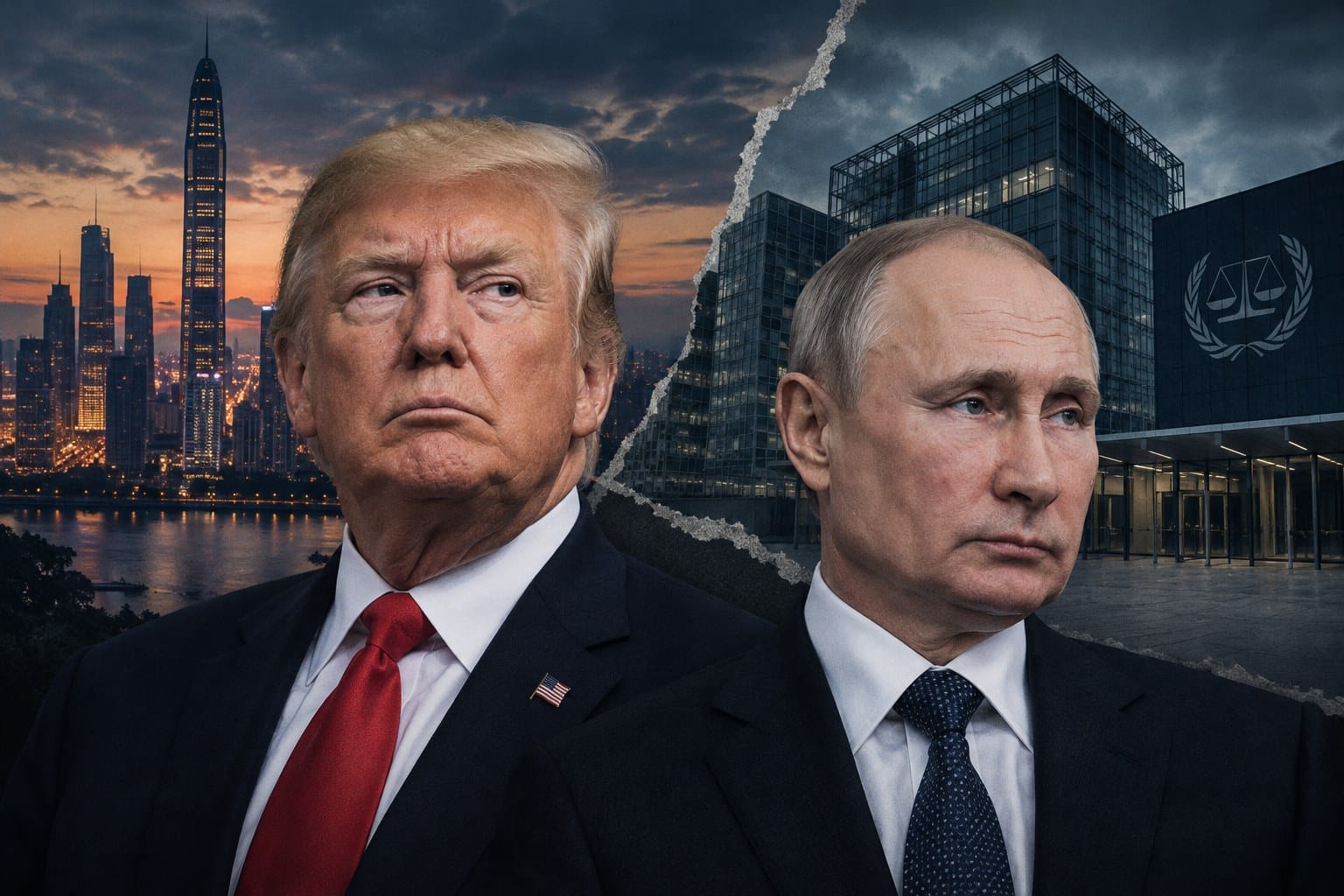
The Shenzhen communiqué lists three promises: secure energy supplies, talk about nuclear risks, and preserve strategic balance. None has a timetable or a mechanism. Only the clause targeting the International Criminal Court has the clarity of a commitment: the three leaders ask that the Court and similar institutions not make abusive use of their positions.
According to the author, energy shows this. Since the American strikes on Iran in February, Tehran has blocked the Strait of Hormuz, through which one fifth of global crude passed. Ukrainian attacks on Russian sites are further worsening the tension. On the ICC, the interests converge: Washington wants to dismantle the Court and sanctions its officials, while Moscow faces a warrant against Vladimir Putin.
According to the author, the Court still carries weight: Putin has declined several G20 meetings, and European members refuse to sit with Putin. But it has neither police nor umpire, and the United States, outside its Statute, is not required to have Putin arrested. Trump invited Putin to the Miami G20, scheduled for next month. For the author, international justice has force only where states agree to follow its decisions.
Read the full article on geopolitique-profonde.com (in French)